

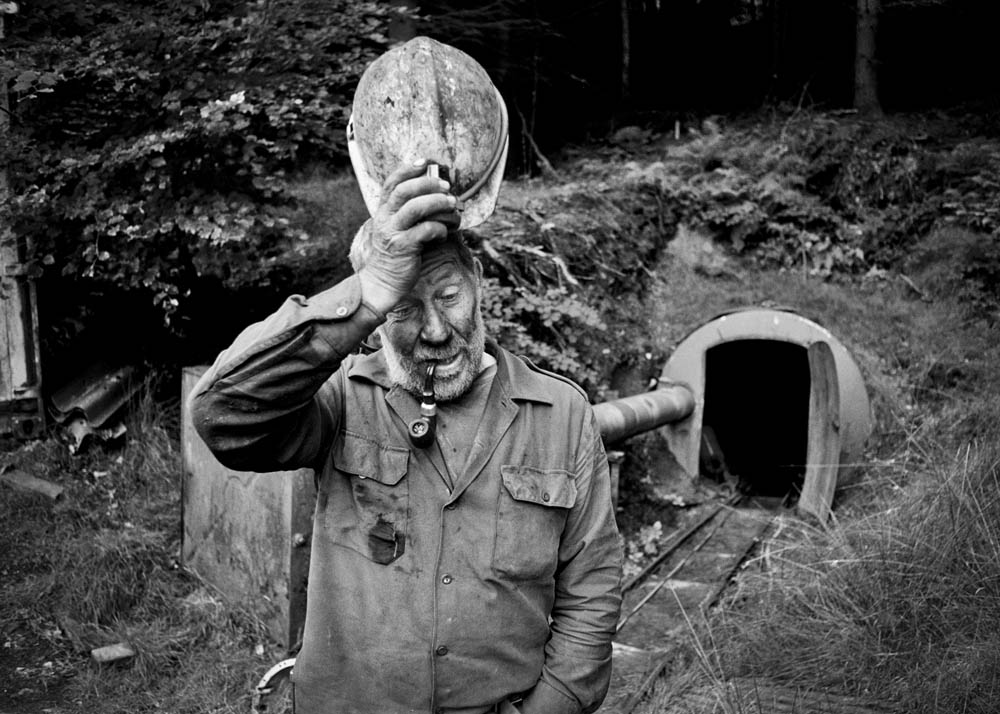
Gerald Haynes, Royal Forest of Dean Freeminer
10 September 2012
Gerald Haynes finishes another long shift underground. He wipes the sweat from his face before stepping back into daylight.
For nearly 30 years, Gerald worked alone in the Haynes Baily Mine in the Forest of Dean. He owned the mine and ran it by himself. The work was hard, dirty, and physically exhausting. Six days a week, he laboured underground with no phone signal, no radio, and no natural light. Most days, he worked in silence.
When Gerald retired, he sold the mine so it could continue operating. Today, only a handful of small mines remain in the Forest of Dean.
The Royal Forest of Dean Freeminers
Freeminers have a long and unusual history. Their right to mine dates back to the 13th century. According to tradition, local miners were rewarded for helping the king during military campaigns. After the siege of Berwick in 1296, King Edward I granted them special mining rights.
Because of their skill in digging and tunnelling, Freeminers became known as the “King’s Pioneers.” They helped undermine castle walls and build defences in campaigns across Wales, Scotland, and France. They later fought in major battles such as Crécy (1346) and Agincourt (1415).
By the 1920s, hundreds of small mines operated in the Forest of Dean. Today, only about six active mines remain.
Freeminers in the First World War
During the First World War, many Freeminers returned to military service. Their tunnelling skills made them valuable in trench warfare. They repaired trenches, dug tunnels, and built defences close to enemy lines. This dangerous work led to heavy losses.
Who Can Become a Freeminer?
To become a Freeminer, a person must:
Be male
Be born within the Hundred of St Briavels (the historic area of the Forest of Dean)
Be at least 21 years old
Have worked underground in a local mine for more than a year
Since the 1840s, more than 4,300 men have registered as Freeminers.
In October 2010, Elaine Morman became the first woman officially accepted as a Freeminer. This marked a significant change in a tradition that had excluded women for centuries.
Historically, women and children did work in the mines. However, their contributions were rarely recorded or recognised.
Today, around 100 people still hold the right to mine, although many are retired. With fewer local births and changing industries, it is becoming harder to continue the tradition.
More Than Coal
The mines of the Forest of Dean have produced more than coal. At Clearwell Caves, miners have extracted iron ore and natural ochre for centuries. Ochre is a mineral pigment used by artists for painting and glazing.
Some of these historic workings are now open to visitors, offering a glimpse into the region’s industrial past.
About the Photographer: Andrew Fox
This photograph was taken by Andrew Fox.
Andrew began his career at the Birmingham Post & Mail after completing his photojournalism training in 1988. While still a trainee, he won Midlands Press Photographer of the Year.
The newspaper was known for its serious approach to black-and-white photography. In the late 1990s, Andrew became a freelance photographer. He soon received commissions from national newspapers and went on to work regularly for major UK publications, including The Independent, The Guardian, The Times, and The Telegraph.
His work has been exhibited internationally, including at the Visa Pour L’Image photojournalism festival in France and at the House of Commons in London. Over the years, he has received several awards, including Nikon UK Feature Photographer of the Year and multiple honours from the UK Picture Editors Awards.